Napoleon vs Continental furnace models are essentially identical units produced by the same manufacturer in Barrie, Ontario, where Napoleon is distributed through a dedicated dealer network and Continental is sold to independent installers. Both brands provide high efficiency ratings up to 97% AFUE and are specifically engineered to withstand harsh Canadian winters. Choosing between them usually comes down to the specific warranty or installer preference, as the core components and performance remain the same across both lines.
Choosing a new furnace often feels like navigating a maze of technical specifications and marketing jargon, particularly when two leading brands appear almost identical on paper. For homeowners across the Kawarthas, the choice between Napoleon and Continental is frequently met with confusion because both brands originate from the same parent company, Wolf Steel. Making an uninformed decision can lead to missed opportunities for energy savings or paying a premium for features that do not align with your home’s specific heating demands. At Kawartha Heating Solutions, we believe in transparency and technical precision. This guide will clarify the relationship between these two industry giants, compare the specific nuances of the 9600 and 9700 series, and evaluate how each performs during a brutal Ontario winter. By the end, you will understand exactly which system offers the best return on investment for your property.
The Shared DNA of Napoleon and Continental Furnaces
Homeowners in Norwood often ask about the specific differences in a Napoleon vs Continental furnace comparison. The reality is that both brands share the same engineering DNA. They are manufactured by Wolf Steel Ltd. at their facility in Barrie, Ontario. Because they are designed and built right here in the province, these units are specifically engineered to handle the unique demands of an Ontario winter, from the damp cold near Rice Lake to the deep freezes we see in the northern Kawarthas.
We often describe Napoleon and Continental as sister brands. To use a familiar analogy, think of them like GMC and Chevrolet. Under the hood, the core components like the engine and frame are virtually identical. The primary difference lies in how they are marketed and distributed. Napoleon is positioned as the flagship brand, typically sold through exclusive dealer networks. Continental is the counterpart often provided to independent contractors and wholesale channels.
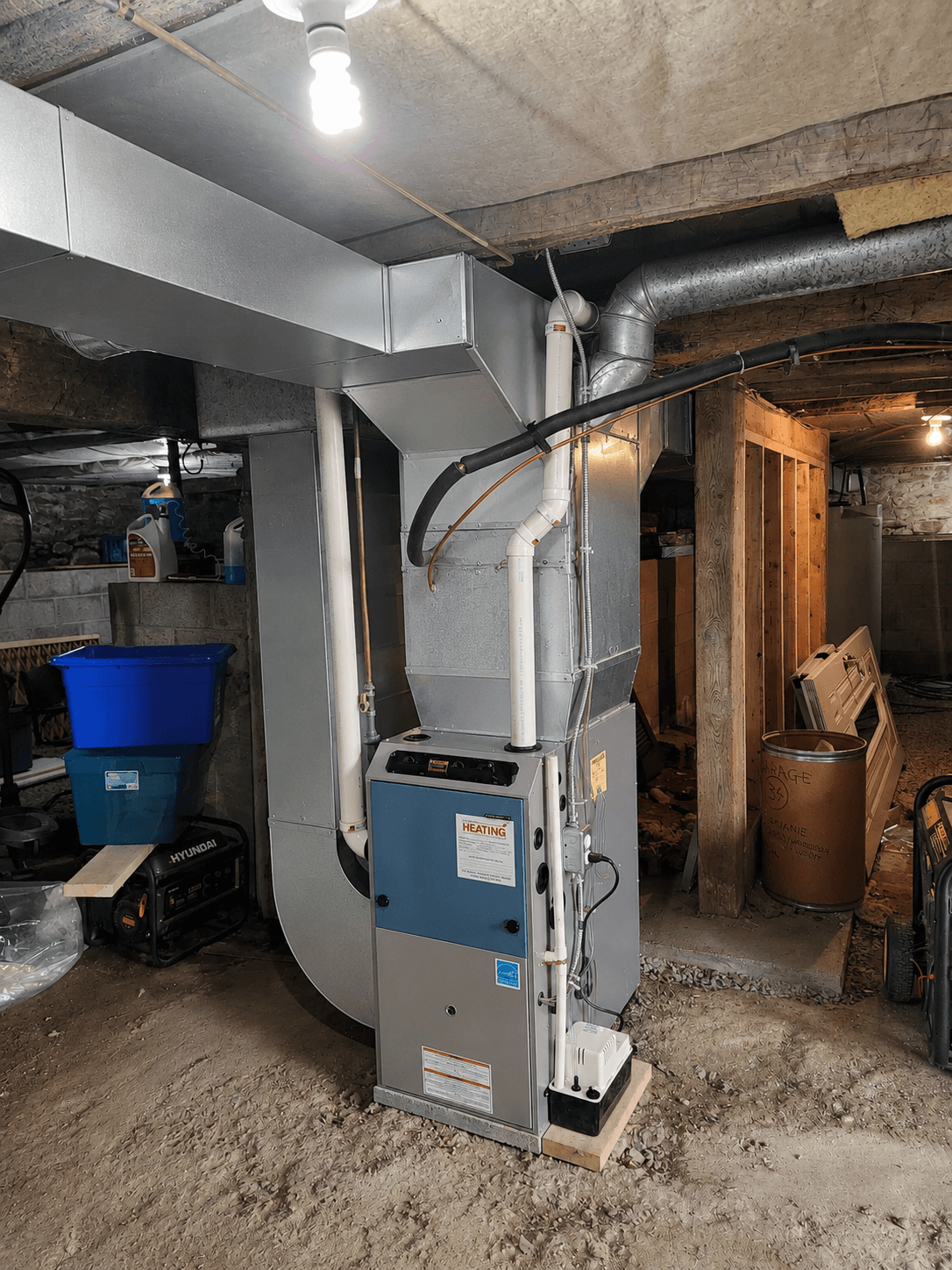
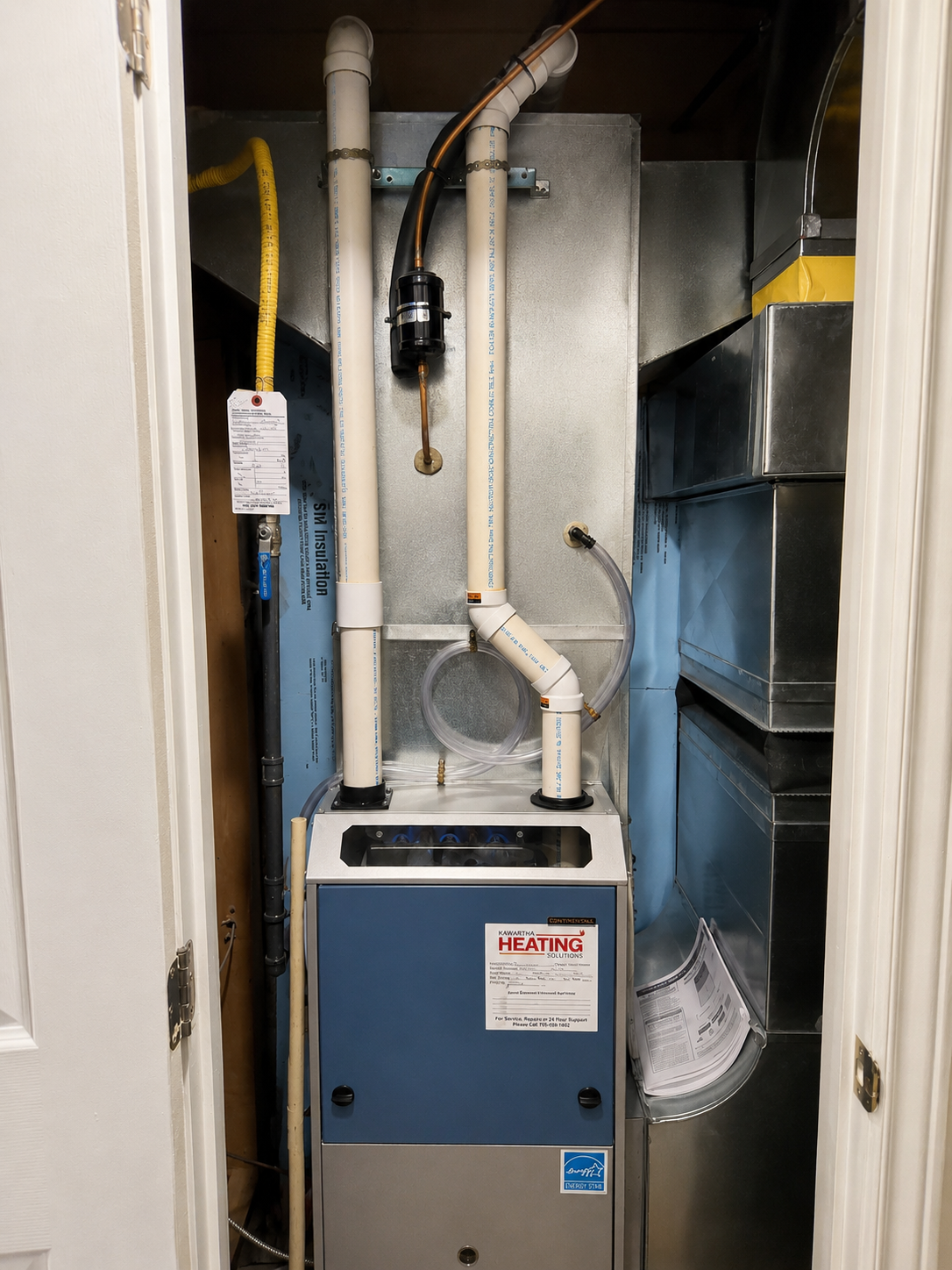
For a homeowner seeking custom heating solutions, this means the mechanical reliability is consistent across both labels. When we perform a Napoleon and Continental furnace installation, we are working with the same heat exchangers and blower technology regardless of the badge on the front. This shared manufacturing process ensures that parts are easily accessible in rural Ontario. Both brands draw from the same supply chain managed out of Barrie, which is a significant advantage for local homeowners who cannot afford long wait times for specialized components during a January cold snap.
Comparing the Core Technology: Are They Actually Different?
Peeling back the cabinet doors reveals that the Napoleon vs Continental furnace debate is largely about branding rather than mechanical deviation. Both lines utilize Wolf Steel’s proprietary Vortex Technology. This system uses internal turbulators within the heat exchanger to swirl the hot combustion gases, forcing them against the walls of the tubes for a longer duration. This process extracts every possible BTU before the air is vented outside, a critical feature for maintaining efficiency during a Norwood cold snap.
The structural integrity of these units relies on identical heat exchanger designs. Most models feature heavy duty, tubular heat exchangers made from aluminized or stainless steel. Unlike older, flat plate designs that were prone to cracking at the weld points, these tubular versions expand and contract more evenly under extreme temperature shifts. Beyond the heat exchanger, the internal components are often interchangeable. You will find the same Emerson or White-Rodgers gas valves and identical integrated furnace control boards in both brand lines.
Component | Shared Specification | Benefit |
|---|---|---|
Heat Exchanger | Tubular Aluminized/Stainless Steel | Resists thermal fatigue and corrosion |
Blower Motor | Multi-speed or Variable ECM | Reduces hydro costs and operating noise |
Burners | Stainless Steel | Clean combustion and long term longevity |
Technology | Vortex Turbulator | Maximum heat transfer efficiency |
For homeowners concerned about long term reliability, these shared specifications ensure that choosing a Continental unit does not mean settling for secondary hardware. The differences are purely cosmetic, involving the powder coated cabinet color and the brand badge. Because the core hardware is identical, furnace service and maintenance remains straightforward for our technicians. We source the same high quality components for either brand directly from the Barrie plant, ensuring your home stays warm regardless of which nameplate sits in your basement.
Napoleon 9600 vs 9700 Series: Understanding the Technical Gaps
While the internal engineering is largely shared, the distinction between the 9600 and 9700 series represents the jump from a high-efficiency workhorse to a premium environmental system. These differences apply equally to the Napoleon and Continental labels. The 9600 series is the standard for many local upgrades, offering up to 96 percent AFUE. It is almost universally ENERGY STAR certified, making it a frequent choice for homeowners focused on meeting specific rebate requirements.
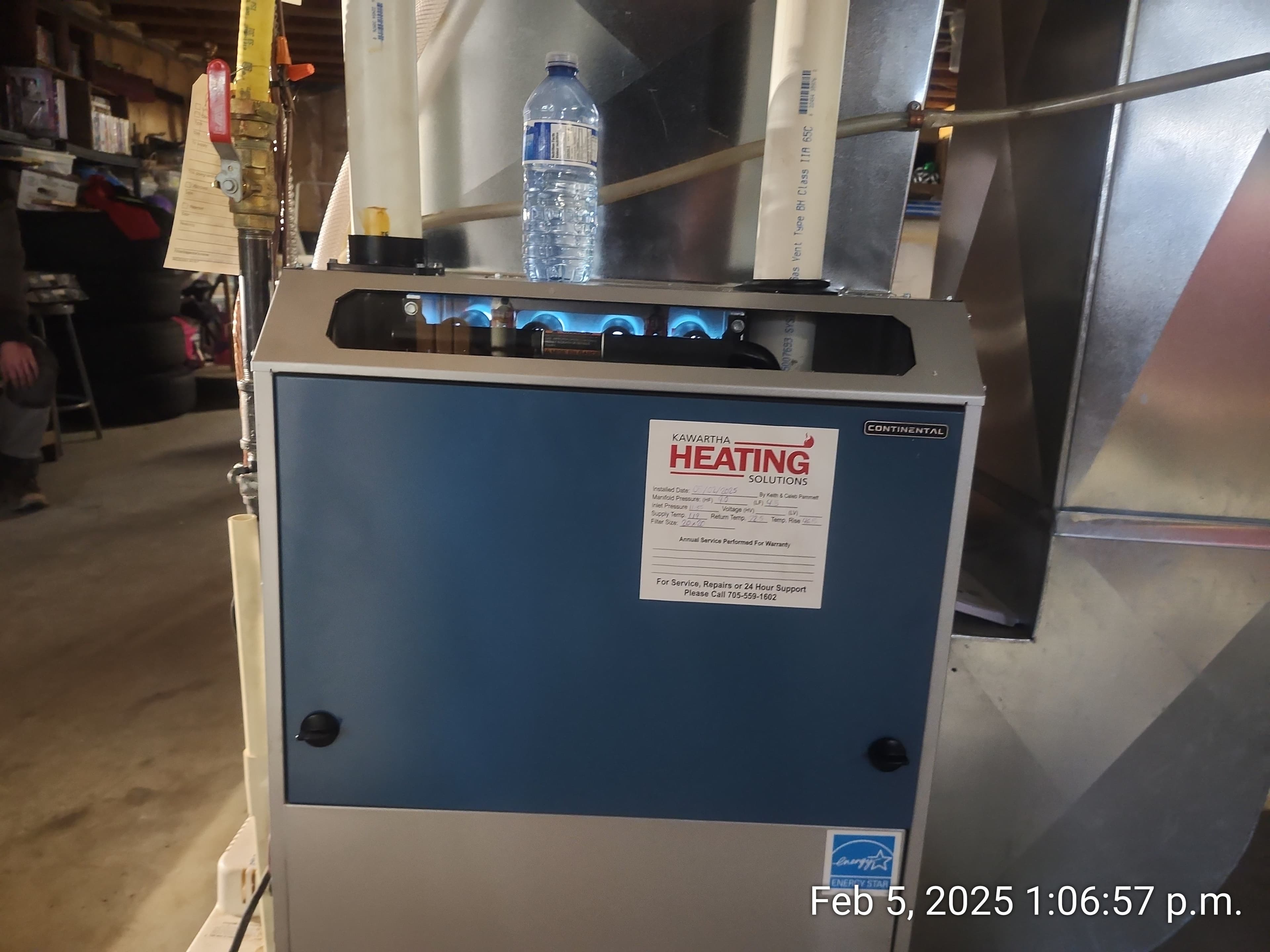
In contrast, the 9700 series reaches a slightly higher 97 percent AFUE, yet it sometimes lacks the ENERGY STAR label. This paradox occurs because the 9700 includes additional high performance features that consume a small amount of electricity, which can impact the specific testing formulas used for certification despite the unit actually being more efficient at converting gas to heat. The 9700 is defined by two major hardware additions. The first is the SureView window, a tempered glass portal that allows for a direct visual inspection of the burner flames. This is a practical tool for furnace service and maintenance, as it allows us to verify ignition and flame health without breaking the cabinet seal.
Feature | 9600 Series | 9700 Series |
|---|---|---|
Efficiency (AFUE) | Up to 96% | Up to 97% |
ENERGY STAR | Typically Certified | Often Not Certified |
Visual Inspection | Solid Cabinet | SureView Sealed Window |
Air Purification | Optional Add-ons | Integrated UV Light System |
The second major upgrade in the 9700 is the integrated medical grade UV light. For a homeowner in Norwood or the surrounding Kawartha Lakes, this is a significant factor in custom heating solutions. During our long winters when windows remain shut for months, indoor air quality can degrade. The 9700’s UV light helps neutralize airborne pathogens and mold spores before they circulate through your ductwork. If your household prioritizes respiratory health and air purity, the 9700 series is the superior investment. If your primary goal is reliable, high efficiency heating with a simpler mechanical profile, the 9600 series remains the industry benchmark for the Napoleon vs Continental furnace comparison.
Performance in the Kawartha Climate: From Norwood to Lakefield
The real test of a Napoleon vs Continental furnace happens during a persistent January cold snap in Peterborough County. When temperatures drop below -25°C, the heating system must provide consistent output without short-cycling. For many older, draftier residences in Lakefield or the surrounding rural townships, we prioritize two-stage heating models. These units operate at a lower capacity for the majority of the time to maintain a steady temperature, ramping up to full power only when the mercury plummets. This prevents the uncomfortable temperature swings common with single-stage units in poorly insulated structures.
In newer Norwood builds where homes are tighter, the precision of these units ensures efficiency is maximized. Proximity to the Kawartha Lakes also introduces high seasonal humidity, which can be hard on mechanical equipment. The corrosion-resistant, powder-coated cabinets used by Wolf Steel are built to withstand these damp conditions, protecting the internal electronics and heat exchangers from moisture-related wear.
From a service perspective, the modular design is a significant advantage for rural homeowners. Because major components are easily accessible and parts are sourced from nearby Barrie, a Napoleon and Continental furnace installation ensures long-term support. Our team can perform furnace service and maintenance more effectively because components are standardized across both lines, providing custom heating solutions that minimize downtime during the harshest weeks of winter.
Cost vs Value: Napoleon vs Continental Furnace Differences
Budget considerations usually dictate the final choice in a Napoleon vs Continental furnace comparison. Homeowners will find that Napoleon units typically carry a slight price premium. This additional cost is rarely tied to mechanical superiority; rather, it reflects the brand's flagship status and its exclusive distribution through specific dealer networks. Continental functions as the value-driven alternative, providing the exact same internal engineering and Canadian-made reliability at a more accessible price point for the average Norwood household.
Long-term value is secured by the robust warranty packages shared by both brands. When you invest in a new system, you receive a 10 year limited parts warranty and a lifetime heat exchanger warranty regardless of which badge is on the cabinet. Because these units are manufactured in Barrie, local homeowners benefit from a streamlined supply chain. During a furnace service and maintenance appointment, our ability to source genuine replacement parts quickly from within the province adds a layer of security that off-shore brands cannot match.
Feature | Napoleon Series | Continental Equivalent |
|---|---|---|
Upfront Cost | Higher (Brand Premium) | Lower (Value Positioning) |
Core Components | Wolf Steel Proprietary | Wolf Steel Proprietary |
Parts Warranty | 10 Years | 10 Years |
Heat Exchanger | Lifetime Limited | Lifetime Limited |
The most critical factor for return on investment is not the brand logo, but the quality of the Napoleon and Continental furnace installation. A premium furnace will underperform and suffer frequent breakdowns if it is not calibrated for the specific static pressure of your existing ductwork. Choosing custom heating solutions that emphasize precise venting and professional commissioning in your local basement is far more important for equipment longevity than the brand name itself.
Expert Verdict: Which Furnace Should You Choose?
Deciding between these options comes down to prioritizing either advanced indoor air quality or straightforward mechanical value. If you are looking for the top tier experience, the Napoleon 9700 is the clear choice. Its integrated medical grade UV light system and the SureView window provide peace of mind for both health and maintenance. It is the Cadillac of the lineup, offering a premium aesthetic that fits well in finished utility spaces.
For homeowners focused on a high return on investment without the additional features, the Continental equivalent of the 9600 series is the most practical path. It delivers the same 96 percent AFUE performance and shares the identical Vortex heat exchanger technology found in the more expensive flagship models. This makes it an ideal candidate for a Napoleon and Continental furnace installation where the goal is reliable, efficient heat for a standard Kawartha home.
Homeowner Priority | Recommended Model | Primary Benefit |
|---|---|---|
Air Quality & Tech | Napoleon 9700 | UV Purification & SureView Window |
Value & Efficiency | Continental 9600 | 96% AFUE & Lower Initial Cost |
Maximum Warranty | Either Brand | Lifetime Heat Exchanger Coverage |
The regional advantage of Wolf Steel products cannot be overstated. Because every unit we install is engineered and manufactured in Barrie, local technicians at Kawartha Heating Solutions have immediate access to the supply chain. If a component fails during a February cold snap, we are not waiting on a shipping container from overseas; we are sourcing parts from our own backyard. This local proximity ensures that your furnace service and maintenance is performed quickly, providing the custom heating solutions necessary to keep your Norwood residence safe and warm throughout the winter.
Choosing between Napoleon and Continental furnaces often comes down to your home's unique layout and your heating priorities. Both brands offer exceptional Canadian craftsmanship and energy efficiency, yet the right choice depends on a detailed assessment of your living space. If you want expert help navigating these options, our team is ready to provide personalized recommendations. You can explore our professional Furnace Installation / Continental Furnace solutions to find a reliable heating system that fits your Kawartha home perfectly.