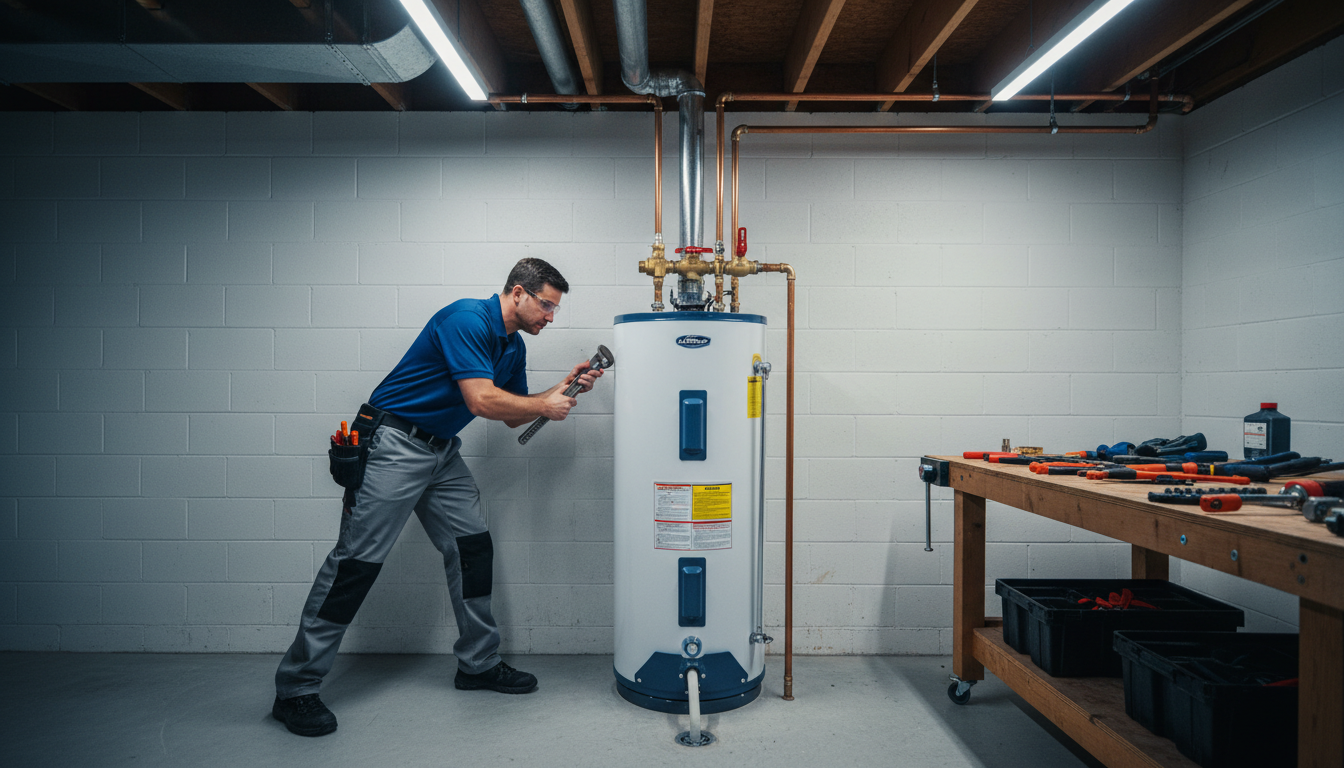
Professional water heater installation Ontario costs typically range from $1,600 to $3,150 depending on the fuel source and tank capacity. While gas units must be installed by a TSSA licensed professional by law, electric tanks may be installed by homeowners provided they obtain a mandatory ESA inspection. Rural residents should also consider specialized anode rods and specific venting requirements to account for well water and cottage infrastructure.
When you arrive at your cottage for a weekend of relaxation only to be met by a failing water heater, the charm of rural living quickly fades. In Ontario, particularly throughout the Kawarthas, installing a reliable hot water system involves more than just a simple swap; homeowners must navigate specific TSSA regulations and the unique chemistry of well water while choosing a fuel source that makes sense for a remote location. This guide provides an expert breakdown of everything you need to know about rural water heater installation. We will explore the legal requirements for TSSA and ESA compliance, compare propane versus electric options, and address how to protect your investment from sediment and sulfur. By understanding these technical factors, you can ensure your home remains comfortable, efficient, and fully compliant for years to come.
Navigating Water Heater Installation in Ontario Rural Contexts
Homeowners in Norwood and across the Kawarthas face a distinct set of challenges when upgrading their mechanical systems. Most online resources for water heater installation Ontario are written for urban environments where natural gas is the standard and municipal water is treated. In a rural context, the variables change significantly. You are likely managing a private well system, relying on propane deliveries, or navigating the specific venting requirements of an older cottage build.
Well water introduces heavy mineral loads and potential sulfur issues that can degrade a standard tank in half the time expected in a city. Furthermore, the lack of natural gas infrastructure makes propane the primary fuel source for high recovery heating, which brings its own set of safety protocols. In Ontario, these installations are governed by strict provincial codes. Attempting a DIY setup is not just a safety risk; it is a legal liability. The Technical Standards and Safety Authority (TSSA) and the Electrical Safety Authority (ESA) mandate that specific components of the install be handled by licensed professionals to ensure fire safety and prevent environmental contamination. Securing reliable heating solutions for your cottage means understanding that a rural installation is a specialized trade task, not a weekend project.
Ontario Legal Requirements: TSSA and ESA Regulations

In Ontario, the legal framework for water heater installation is strict, designed to protect homeowners from the significant risks of fire, carbon monoxide poisoning, and water damage. If your cottage or home uses propane, the installation falls under the jurisdiction of the Technical Standards and Safety Authority (TSSA). Provincial law mandates that only a TSSA certified gas technician can handle the fuel connection. This includes the initial certified propane gas line installation and the final connection to the tank itself. Attempting this without a license is illegal and carries heavy fines; more importantly, it bypasses critical pressure tests that ensure your fuel system is leak free.
For homeowners opting for electric models, the Electrical Safety Authority (ESA) oversees the installation. While Ontario law allows some homeowners to perform electrical work on their own primary residence, the work must still comply with the Ontario Electrical Safety Code. This requires obtaining a permit and scheduling a follow up inspection from the ESA to ensure the wiring and grounding are safe for a high draw appliance.
A common question we hear is whether a DIY installation is worth the savings. In the Kawarthas, the answer is usually a firm no. Insurance providers for rural properties and seasonal cottages often require a Certificate of Inspection or a professional invoice to maintain coverage. If a DIY installation fails and causes water damage or a fire, the insurance company can legally deny the claim on the grounds that the work was not performed to provincial code. Professional water heater installation Ontario ensures you have the necessary documentation to satisfy these insurance requirements while keeping your family safe.
Propane vs Electric: Choosing the Right Fuel for Your Cottage
Choosing between electric and propane involves more than just comparing monthly utility bills. In the Kawarthas, the decision often hinges on how you use your property and how much you value reliability during a winter storm.
Electric water heaters are a frequent choice for seasonal cottages due to their lower initial investment. A standard professional installation typically ranges from $1,600 to $2,400. These units are simpler to house within a utility closet because they do not require venting through a roof or side wall, but they suffer from a slower recovery rate. If you have a large family taking back to back showers after a day on the lake, an electric tank will struggle to maintain temperature as the cold well water enters the system.
Propane units are the heavy hitters for year round residents. Propane has a much higher energy density than electricity, which allows these tanks to heat water significantly faster. While the initial investment is higher, typically between $1,800 and $2,800, the performance gain is substantial. A critical factor for rural Norwood residents is reliability during power outages. If you select an atmospheric vent propane model, the unit uses a pilot light and mechanical gas valve that requires no grid power to operate. You can lose electricity for days and still enjoy a hot shower.
Precision is required when sourcing equipment for your water heater installation Ontario. Most retail units are factory configured for natural gas, which operates at a lower pressure. In a rural setting, you must use a dedicated propane model or have a licensed technician install a specific propane conversion kit. This process involves swapping burner orifices and adjusting the gas regulator to manage propane’s higher caloric value safely.
Feature | Electric Tank | Propane Tank (Atmospheric) |
|---|---|---|
Estimated Install Cost | $1,600 to $2,400 | $1,800 to $2,800 |
Recovery Speed | Slow | Fast |
Function During Outage | No | Yes |
Venting Required | None | Yes (Chimney/B-Vent) |
If you are already planning expert furnace installation in Norwood, it is often more cost effective to coordinate your water heater upgrade at the same time to optimize your propane line routing and ensure your fuel delivery system is sized correctly for the total BTU load.
The Well Water Challenge: Anode Rods and Sediment

The mineral composition of the water in Norwood and surrounding rural areas is arguably the biggest threat to a new water heater installation Ontario. Unlike municipal water, well water is untreated and often high in calcium, magnesium, and sulfur. These elements cause internal corrosion and the distinct "rotten egg" odor that many cottage owners struggle with. The first line of defense is the anode rod, a sacrificial component designed to corrode so your tank does not.
Choosing the right rod is critical for well systems:
Anode Rod Type | Recommended Use Case | Key Benefit |
|---|---|---|
Magnesium | Standard for soft or neutral water | Highest level of protection but can react with sulfur to cause smells. |
Aluminum | Hard water with minor odor issues | Less reactive than magnesium, helping to mitigate sulfur scents. |
Powered | Heavy mineral content and strong sulfur smells | Uses electrical pulses instead of dissolving; the gold standard for well water longevity. |
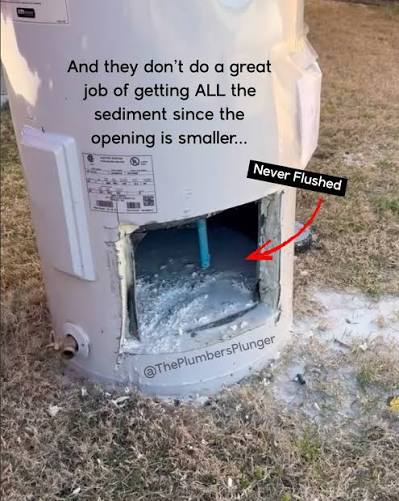
While the anode rod handles chemical corrosion, sediment creates a mechanical problem. Hard water minerals precipitate out of the water as it heats, settling at the bottom of the tank. This layer of scale acts as an insulator between the burner or heating element and the water. In a propane unit, the burner must stay on longer to penetrate the sediment, which can lead to the tank overheating and the metal eventually becoming brittle and cracking. This extra stress significantly reduces the overall efficiency of your system.
Mitigating these issues requires a proactive approach. Installing a sediment pre-filter or a water softener upstream of the heater can extend the life of the unit by years. For seasonal properties, flushing the tank at the beginning and end of the season is non-negotiable. This prevents the "popping" sounds caused by trapped steam bubbles under the sediment layer and ensures your heater remains efficient throughout its lifespan.
Venting Options: Atmospheric Vent vs Power Vent Tanks
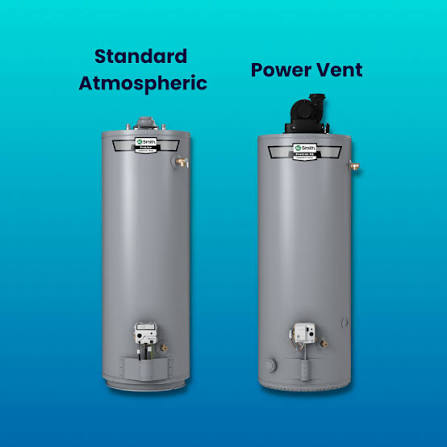
While the internal health of the tank depends on water quality, the safety of your home relies on proper exhaust management. Choosing between atmospheric and power venting is a decision that affects both your floor plan and your comfort during a blackout.
Atmospheric vent tanks are the traditional choice for many rural properties and older cottages. These units rely on natural convection to pull combustion gases up through a vertical metal chimney. Because they do not require a blower motor, they operate entirely without electricity. For homeowners in Norwood who prioritize resilience, an atmospheric model ensures hot water is available even when the local grid goes down during a winter storm.
Power vent tanks offer a different set of advantages. These units use an integrated fan to push exhaust gases horizontally through a side wall via PVC piping. This eliminates the need for a vertical masonry chimney and allows for much more flexible placement within a utility room. However, the reliance on a motorized fan means these tanks require a nearby electrical outlet and will cease to function during a power outage unless backed up by a generator.
Feature | Atmospheric Vent | Power Vent |
|---|---|---|
Exhaust Path | Vertical chimney | Side wall (horizontal) |
Pipe Material | Metal (B-Vent) | PVC / CPVC |
Power Needed | No | Yes (standard outlet) |
Placement | Restricted by chimney location | Highly flexible |
When planning a water heater installation Ontario residents must consider if their existing chimney is sized correctly for a modern atmospheric unit. In many cases, transitioning to a power vent model is the most practical solution for renovations where the original chimney has been decommissioned or no longer meets current TSSA safety codes.
Estimated Costs for Rural Water Heater Installation in Ontario
Budgeting for water heater installation Ontario requires a realistic look at the 2025/2026 market rates, especially when dealing with rural logistics. Professional installation in the Kawarthas involves regional variables that urban quotes often miss, ranging from extended travel times to complex plumbing retrofits.
System Type | Estimated Professional Install Cost (2025/2026) |
|---|---|
Electric Tanks | $1,600 to $2,400 |
Atmospheric Propane Tanks | $1,800 to $2,800 |
Power Vent Models | $2,400 to $4,200 |
For homeowners in Norwood or surrounding cottage areas, these figures typically cover the unit, labor, and standard connections. However, rural projects frequently involve additional scope. If you are transitioning from an old wood-fired boiler or a basic electric setup to propane, you must account for the certified propane gas line installation required to fuel the new tank. Travel fees for remote lakefront properties and the need for specialized piping to handle high mineral content can also influence the final invoice. Investing in professional installation ensures these variables are managed correctly the first time.
Maintenance Tips to Double Your Tank Life in the Kawarthas
Maximizing the lifespan of your unit in the Norwood area requires active management of mineral heavy local water. A professional water heater installation Ontario homeowners complete is only the starting point for decades of hot water. To prevent premature failure, implement a seasonal maintenance routine focused on your specific environment.
Full Tank Flush: Perform this bi-annually to remove well water sediment and restore heating efficiency.
Valve Testing: Annually check the pressure relief valve to ensure it is not seized or blocked by scale.
Anode Inspection: Pull the rod every 2 to 3 years; replace it immediately if the sacrificial metal has dissolved to reveal the core wire.
Professional oversight is vital for propane systems to ensure long term safety. Technicians verify that your certified propane gas line installation remains leak free and that the burner assembly functions safely under TSSA standards. This preventative care ensures your system stays compliant and reliable through the harshest Kawartha winters.
Installing a water heater in a rural or cottage environment requires careful consideration of water quality, venting, and power availability. Choosing the right system ensures your home remains comfortable and efficient for years to come. While these guidelines provide a helpful starting point, professional installation ensures every safety standard is met. If you want expert help selecting and installing the ideal unit for your specific property, you can explore our full range of services to find the right fit. We are here to help your cottage feel like home.